







The Illinois Accountability Commission has issued its final report following an extensive review of Operation Midway Blitz, a federal immigration enforcement initiative conducted across the Chicago metropolitan region.
The Commission was formed in October 2025 through an executive order issued by Governor J. B. Pritzker. Its mandate was to evaluate allegations of misconduct involving federal immigration enforcement agents and to assess the broader consequences of those actions on individuals, families, and communities throughout Illinois.
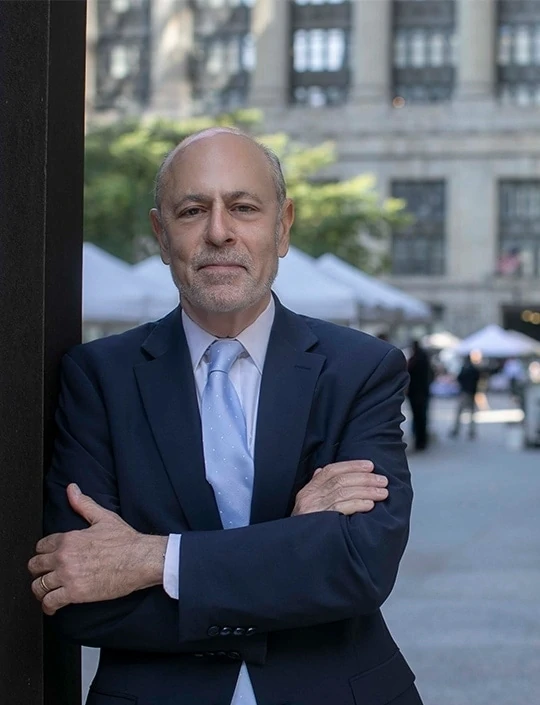
The Commission’s work included significant legal oversight and participation from members of the Illinois legal community. Matthew J. Piers, Senior Counsel at HSPRD, served as Special Counsel to the Commission and to it's Chair, Rubén Castillo. Additionally, Susan Gzesh, Of Counsel at HSPRD, served as a Commission member.
In connection with his role, Matthew J. Piers stated:
“I am honored to serve as Special Counsel to the Illinois Accountability Commission, Governor Pritzker’s historic and essential response to the unconstitutional and criminal misconduct by ICE and CBP agents acting at the direction of President Trump and members of his administration. The IAC final report is essential ready for those who support our democracy.”
Illinois is the first state in the country to conduct a formal state-level investigation into alleged misconduct by federal immigration enforcement agencies and to issue a comprehensive public accounting of its findings.
The Commission identified a range of concerns regarding the conduct of federal agencies, including U.S. Immigration and Customs Enforcement, U.S. Customs and Border Protection, and the U.S. Department of Homeland Security:
Use of force and conduct during enforcement operations
The report describes instances of high-speed pursuits, physical force, chemical agent deployment, shootings, and other violent conduct, concluding that these actions in multiple cases rose to unconstitutional levels of force.
Public communication and transparency concerns
The Commission found that federal officials, including representatives of ICE,CBP, DHS, and the White House, repeatedly provided misleading or incomplete public statements regarding the purpose and outcomes of Operation Midway Blitz, while omitting or obscuring key facts.
Discriminatory enforcement patterns
The report cites evidence of unlawful stops and warrantless arrests, which itstates contributed to widespread fear and instability within immigrantcommunities throughout the Chicago area and beyond.
Militarized enforcement tactics and First Amendment concerns
According to the findings, federal agents frequently used militarized equipmentand tactics, including face coverings, tactical gear, unmarked vehicles, andsurveillance of protestors and observers. The Commission concluded that thesepractices fostered a climate of intimidation that discouraged lawful expressiveactivity.
Detention conditions and due process issues
The report also highlights concerns regarding detention conditions and the use of coercive tactics that, in some cases, pressured individuals to leave the country despite potential legal avenues for relief or residency.
Federal leadership and policy direction
High-level officials within DHS and the White House are described as having enabled or encouraged aggressive enforcement approaches by directing agents to “go hard,” defending questionable uses of force, removing safeguards, and implementing policies that reduced accountability mechanisms.
Community impact across Illinois
Finally, the Commission concluded that Operation Midway Blitz had significant downstream effects, including diminished trust in law enforcement, economic strain in certain business districts, and measurable impacts on the mental health and well-being of children and families across Illinois.
Recent reporting by the Chicago Tribune highlights that theCommission’s findings have been referred to law enforcement agencies forfurther review.
Governor J. B. Pritzker indicated that the report isintended to provide evidentiary support for potential investigations. However,the Commission itself does not have authority to file charges, issue subpoenas,or compel testimony.
Statements from prosecutors emphasize that any criminalcharges would require an independent law enforcement investigation beforeproceeding. The Commission’s role remains limited to fact-finding anddocumentation.
This distinction reflects the gap between the scope of theCommission’s findings and the procedural requirements necessary for potentialenforcement actions.